
Author: Sharon Vogels, Agronomist
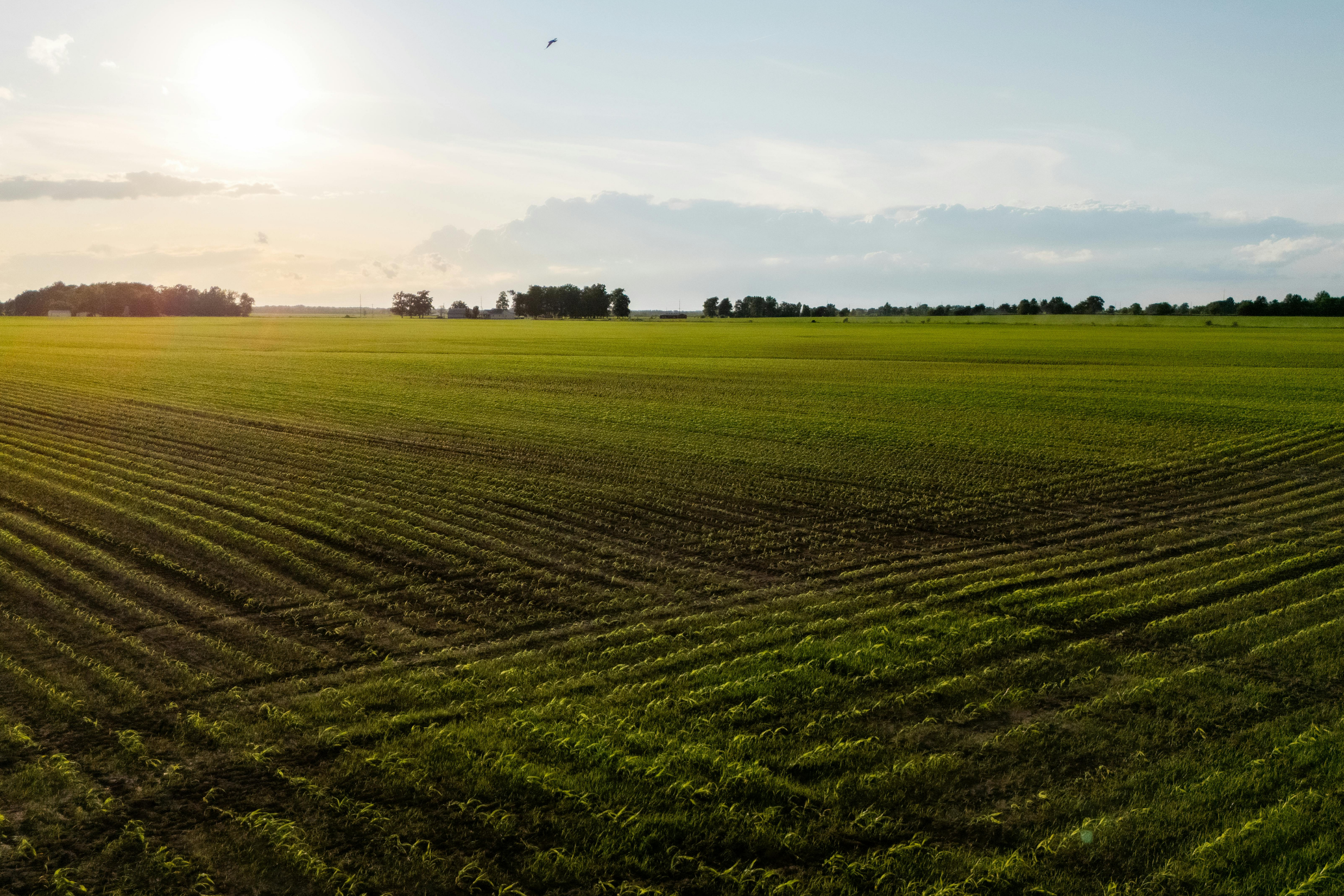
The first 30 days of the season set the stage for yield potential. Getting the crop into the ground in good condition has the biggest impact on overall yield potential.
By the time uneven growth or reduced vigour is visible above ground, the impact has already occurred.
You cannot correct a poor start to the season with inputs later on.
Uniform Emergence Sets the Tone
One of the most consistent indicators of strong yield potential is uniform emergence. When plants emerge at the same time and develop evenly, they are better positioned to capture sunlight, access nutrients, and compete within the canopy.
When emergence is staggered, the dynamic changes. Later-emerging plants fall behind quickly and rarely catch up. In many cases, they contribute little to yield and instead act more like competition within the row.
Your best foot forward for maximizing yield potential is getting the seed uniformly in the soil in good condition. This means focusing on equipment and seedbed preparation. Is there a plan for managing residue (ie tillage or row cleaners)? Has the planter/drill been maintained and calibrated? Is the ground fit for tillage, not just on the surface, but also at the implement depth? Are you checking as planting progresses or field conditions change?
Early Weed Pressure Cannot Be Ignored
Weeds that establish early have a disproportionate impact on yield. Even if they are controlled later, the competition they create in the first few weeks will reduce yield potential.
The critical weed free period is a time in crop development when it is most important to control weeds and minimize competition from both an economic and agronomic perspective. For corn this is the 2-8 leaf over time frame (3-10 leaf tips or 1-6 leaf collars visible). For soybeans, the critical weed free period is 1st to 3rd trifoliate.
Starting clean with a residual herbicide program PPI/PRE/EPOST keeps you ahead of weed competition. If wet weather delays in-crop applications, the residual activity keeps the fields cleaner for longer. Keeping the weed pressure down with an early residual program means any post-emerge applications can be targeted at the few species that do emerge later. Using multiple modes of action selected for the weed species on your farm also helps delay the selection for herbicide resistant populations.
What Happens Below Ground Matters Most
While early growth above ground is important, root development is what ultimately determines how the crop performs under stress later in the season.
Cold soils, excess moisture, and compaction can all limit root growth early on. Limited root growth affects nutrient uptake, particularly phosphorus and key micronutrients.
A strong root system improves the plant’s ability to access nutrients and water, especially during periods of stress. Once that early opportunity is missed, it is difficult to fully recover.
Supporting Early Growth with Targeted Programs
This is where in-furrow and seed-applied solutions can play a supporting role. By placing nutrients and biological support directly in the root zone, these programs help reduce early stress and encourage more consistent development.
Starter systems, particularly those that include phosphorus and micronutrients like zinc, are commonly used to support early root growth. In-furrow programs can also improve early vigour, which often translates into more uniform stands.
These tools are most effective when they are used to complement strong agronomic practices. They are not a substitute for good planting conditions or weed control, but they can help fine-tune performance when everything else is in place.
Small Early Advantages Add Up
The first 30 days influence several key factors that carry through the entire season:
- Plant-to-plant uniformity
- Root system development
- Early nutrient uptake
- The crop’s ability to compete
Each of these contributes to final yield, and they are all shaped early.
Our focus should be on getting the fundamentals right. Plant into the best possible conditions, protect the crop from early competition, and support root development where it makes sense.
Once the season is underway, there are limited opportunities to correct early setbacks.